National Leader School (NLS) Malang

NLS SKILLS AND ATTRIBUTES |
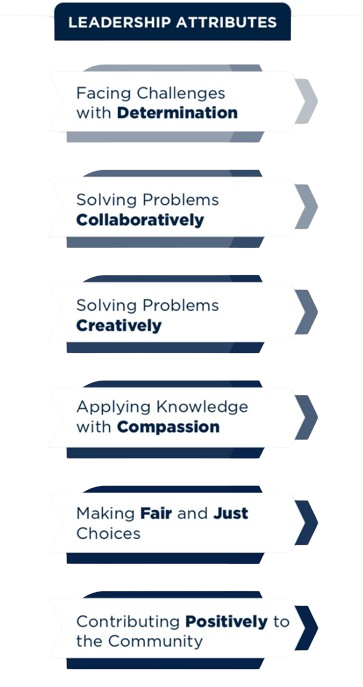
As we prepare our pupils for an exciting world of unknowns, we believe it is important to develop the essential human skills in each of them, as well as our NLS Values and Leadership Attributes. The essential skills are interwoven through the three pillars of our school and can be seen throughout our curriculum, teaching and learning.
The essential skills are an important part of preparing our pupils for life beyond NLS and the future workplace. Through our Curriculum and the Learning and Teaching in the classroom, teacher’s plan how to embed the Essential Skills in their lessons, preparing and developing our pupils and demonstrating to them that these important skills are transferable.
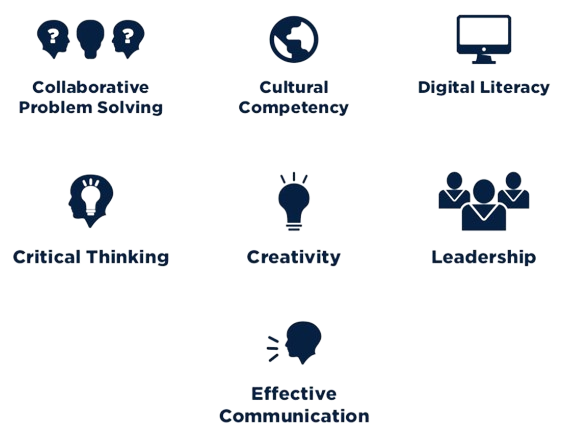
NLS provides an innovative yet structured curriculum that explicitly teaches collaboration, character, communication, problem solving, and critical thinking through an integrated approach to learning. Knowledge and skills are anchored in enduring understandings to prepare students for the challenges of the 21st century and to thrive in an increasingly connected and global world. The curriculum affords students active learning opportunities to construct knowledge and derive meaning. Department demonstrations of learning guide curriculum development and instruction around student outcomes for each discipline.
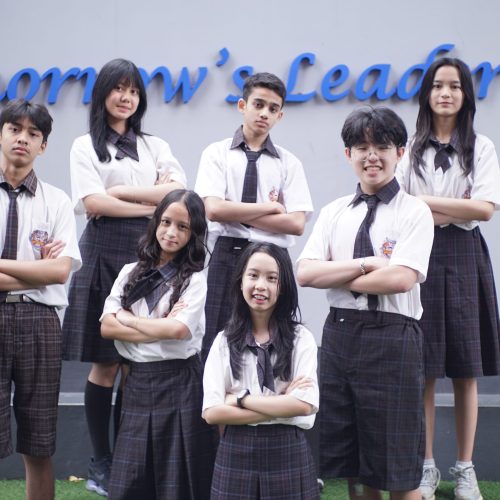
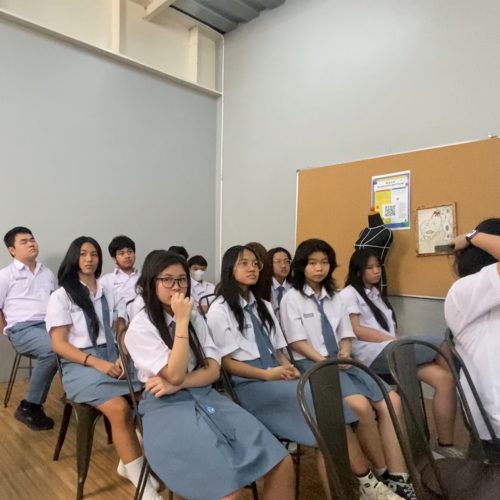
Academic life at National Leader School encourages intellectual curiosity, independent thought and effective learning habits. We offer a coherent and balanced curriculum, as well as a challenging and inspiring Entrepreneurship-S.T.E.A.M pathways.
To better prepare students for intended career pathways, NLS has developed an Entrepreneur plus STEAM program (E-STEAM Pathways). S.T.E.A.M is Science and Technology interpreted through Engineering and art, all based on Mathematical elements. Through S.T.E.A.M., our students will become very effective at teamwork, flexible thinking, and creative problem-solving, and will understand the importance of collaboration.
The Entrepreneur Stream is structured for students with university and career goals including but not limited to commerce, communications, enterprise, economics, finance, law, and marketing. The approach to learning is based on the paradigm of learner-centred education. There are six approaches to learning which are critical thinking, organization, creative thinking, collaboration, communication, and reflection.
We implement the Cambridge Lower Secondary Curriculum and students must follow the Checkpoint test (mandatory). We also use the National Curriculum for Bahasa Indonesia, Religion and PPKN. English as the main language for instruction in most of the subjects and co-curricular activities; classes for Chinese Language and Culture, and Bahasa Indonesia are provided at various levels to suit students’ language competency.
The College curriculum follows GCSE syllabi with examinations taken in Year 11. The academic subjects taught in the Year 9 curriculum are the same as those in the Secondary School, although the Sciences are taught as separate subjects (Biology, Chemistry and Physics).
By the time pupils reach Year 10, they choose the subjects they wish to pursue for their GCSE examinations (optional).
The following academic subjects are studied in an integrated timetable:
• English as a Second Language
• Mathematics
• Algebra
• Physics
• Biology
• Chemistry
• Entrepreneurship
• Religion
• Pendidikan Pancasila
• Bahasa Indonesia
• Social Studies
• Physical Education
• ICT
• Visual Art
• Chinese Language and Culture
• Elective course: Japanese Language and Deutsch (German Language)
All students are exposed to the learning of English & Mandarin Chinese and may sit for the IELTS and HSK (Hanyu Shuiping Kaoshi) Test (Optional). The Year 12 pupils also receive guidance on preparing their personal statement, university essay writing and university interview.